What Happens Before the First Coat: The Prep Nobody Sees
A paint job is judged by its surface, but its lifespan is decided by the work underneath, long before anyone opens a can.
October 14, 2026 · 4 min read
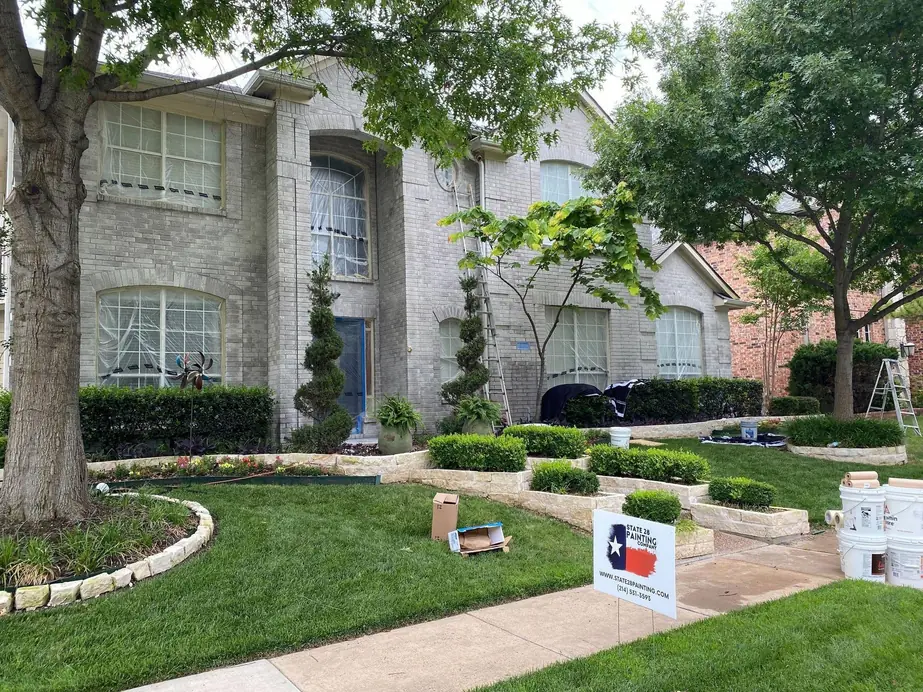
Ask a painter what separates a good job from a bad one and the honest answer is rarely the paint. It is the preparation. Most of the labor on a quality paint project happens before the first coat touches a wall, and most paint failures trace back to a step that was skipped or rushed. This is the list of what actually happens on a well-run job, in roughly the order it happens.
Pressure washing the exterior
On any exterior project, the first thing we do is pressure wash. Dirt, pollen, mildew and chalky residue from old paint all prevent new coatings from bonding. In North Texas, summer dust and spring pollen settle on every surface, and humid shaded walls grow mildew faster than you would expect. Washing takes all of it off and reveals which areas of old paint are already failing.
After washing, the house has to dry. Painting over damp siding or trim traps moisture and invites blistering. A good crew checks that surfaces are dry before moving on, even when that means waiting a day.
Scraping, sanding and feathering
Loose and flaking paint is scraped away until what remains is firmly attached. The edges of those scraped areas are sanded so the transition from bare surface to old paint does not show through the new coat as a ridge. Glossy surfaces such as old enamel on trim and doors are scuffed so the new paint has tooth to grab. Sanding is dusty, repetitive and important, and our Sanding Services handle it as its own stage of the project, not an afterthought.
Wood repair and priming
Bare wood and repaired wood need primer, full stop. Primer seals the grain, blocks stains from bleeding through, and gives topcoat a uniform surface to bond to. Without it, paint soaks in unevenly, flashes in different sheens, and wears off in patches.
Soft or rotted wood is a separate problem. If a screwdriver sinks into the bottom of a window casing or the end of a fascia board, the material has to be repaired or replaced before painting, because paint will not stop rot. Spot priming bare patches and priming whole wood surfaces are both part of our Wood Priming Services.
Caulking and gap filling
Joints between trim and siding, around windows and along door frames move with temperature swings. Old caulk shrinks, cracks and pulls away, letting water in. Cutting out failed caulk and replacing it with a flexible, paintable product is one of the cheapest ways to extend a paint job, and one of the most commonly skipped.
Drywall repair inside
Inside the house, walls tell their whole history under fresh paint. Nail pops, hairline cracks, dents from furniture and old anchor holes all show through new paint, especially in a satin or semi-gloss finish under side light. Our Drywall Repair work fills and sands those flaws, spot primes the patches so they do not flash, and in some cases retextures them to match the surrounding wall.
Houses on North Texas clay settle and shift. Cracks that run from the corners of doors and windows are common here. A patch alone may not stay put if the movement continues, so a repair often includes reinforcing the crack with tape and compound before it is primed and painted.
Masking and protecting your home
Masking is the tedious part that homeowners notice when it is done well, by never noticing a drop of paint on a window, light fixture or floor. Floors are covered, furniture is moved or draped, fixtures and outlet plates are removed or taped, and landscaping and hardscape outside are covered before any spraying or washing starts. Clean edges at ceiling lines, trim and glass come from patient masking, not from a steady hand alone.
Testing for lead-based paint in older homes
Older homes may have layers of paint that contain lead. Sanding or scraping those layers without precautions can spread lead dust through a home, which is a particular concern for children and pregnant women. That is why prep on an older house should start with Lead-Based Paint Testing, before anything is scraped or sanded.
State 28 Painting Company is lead-certified. If a test comes back positive, the work plan changes to contain dust and clean up properly. If you are not sure your home needs testing, ask. It is far easier to find out first than to wonder afterward.
How to tell if a quote includes real prep
- The estimate lists washing, scraping, sanding, caulking and priming as separate items, not a single vague line.
- The painter explains how they handle damaged wood and drywall.
- On an older home, they bring up lead testing before you do.
- A project manager is assigned to the job. We put one on every job site, so someone is accountable for the details.
If you want to see how thorough prep changes a result, ask about our Painting Preparation Services. State 28 Painting Company gives free same-day quotes across the Dallas-Fort Worth Metroplex. Call (214) 771-9145.
State 28 Painting Company, (214) 771-9145
Call (214) 771-9145More articles
When to Repaint Your North Texas Exterior
Texas sun, hail and shifting clay soil wear paint faster than most homeowners expect. Here is how to read the signs and time the job.
Painting Kitchen Cabinets vs. Replacing Them
If your cabinet boxes are solid, new doors and a professional finish can change the whole kitchen without a demolition.