Painting Kitchen Cabinets vs. Replacing Them
If your cabinet boxes are solid, new doors and a professional finish can change the whole kitchen without a demolition.
October 14, 2026 · 4 min read
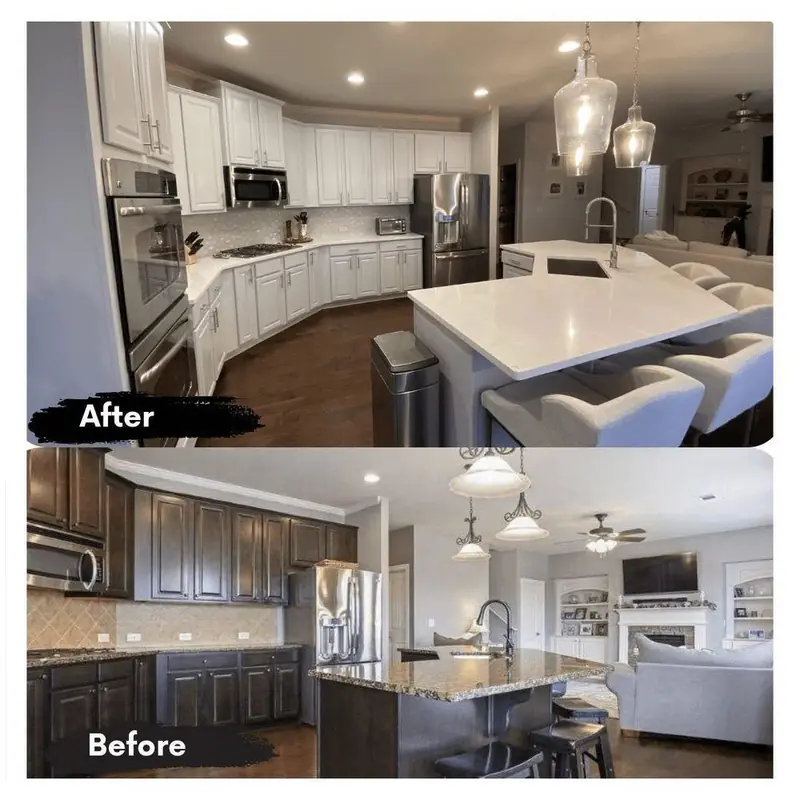
A tired kitchen usually has two possible fixes. You can tear out the cabinets and install new ones, or you can keep what is there and have it refinished. Replacement means demolition, weeks without a working kitchen, and a countertop that may need to come out with the cabinets. Painting means the same layout, the same solid wood or plywood boxes, and a completely different look. Neither answer is right for every house. Here is how to decide, and what a proper cabinet paint job involves.
When painting makes sense
Painting is a strong choice when the cabinet boxes are structurally sound, the layout works for how you cook, and your complaint is mostly color, finish or dated style. Honey oak from a past decade, dark espresso that now feels heavy, and plain builder-grade doors are all good candidates. A fresh finish plus new hardware can look like a different kitchen, and the countertops, backsplash and flooring stay exactly where they are.
If the boxes are swollen from water damage, the doors are warped, or the layout itself is wrong, painting will not solve the problem. A sink base that has absorbed a slow leak for years needs to be replaced, not covered up. A good painter will tell you that during the estimate.
Why prep is most of the job
Kitchen cabinets collect grease, hand oils and cooking residue for years, and paint will not bond to any of it. The first step is a thorough degreasing. Then doors and drawer fronts come off, hardware is removed and labeled, and every surface gets sanded so the new coating has something to grip. Dents, gouges and open grain are filled and sanded flush.
Labeling matters more than people think. Each door goes back on the box it came from so the hinges line up and the gaps stay even. Drawer fronts are numbered the same way. It is slow, unglamorous work, and it is the difference between a finish that holds up to daily use and one that chips at the edges within months.
Primer is not optional
Stained and varnished wood can bleed tannins through light paint, leaving yellow or brown blotches over time. A bonding primer chosen for the cabinet material seals those stains in and gives the topcoat a uniform base. Laminate and previously glossy surfaces need a primer made to grip slick finishes. Skipping this step to save a day is the most common reason cabinet paint peels where fingers touch it.
Between coats, light sanding keeps the surface smooth. Cabinet finishes are judged at arm's length, under kitchen lighting, by people who open and close them every day, so tiny flaws show.
Choosing and matching the color
Cabinet color has to work with the counters, the floor, the backsplash and the light in your particular room. A white that looks crisp in a showroom can read yellow next to warm granite or gray next to cool tile. We recommend testing sample colors on a door or a section of wall and looking at them in morning, afternoon and evening light.
Our in-house color consultant helps with exactly this. If you want to match an existing trim color, a past paint, or a swatch from Sherwin-Williams or Benjamin Moore, bring a sample or a photo. Matching is more accurate from a physical chip than from a phone screen.
Clear coat and durability
Kitchen cabinets get hit with steam, splashes, wet sponges and constant handling. The product that goes on last matters. Depending on the paint system, that can mean a durable cabinet enamel on its own or a clear protective topcoat over the color. Sheen is part of the same decision: satin and semi-gloss clean easily and hide fingerprints better than flat finishes. Ask your painter which system they are using and why it suits your kitchen, and give the finish proper time to cure before heavy use.
Hardware and the final reveal
New pulls and hinges are the cheapest way to make painted cabinets feel new. Before you buy, check that the holes in the doors match the hardware you want, or plan for filling and redrilling. Old hinges that squeak or sag should be replaced while the doors are off. Soft-close hinges can be added at this stage as well.
When the doors go back on, the crew checks alignment, adjusts every hinge and wipes down the whole kitchen. A walkthrough follows, and anything that is not right gets fixed before the job is closed.
A few questions to ask any painter
- Will the doors be removed and finished flat, or painted in place?
- What primer and topcoat are you using, and how long before the cabinets can take normal use?
- Who is supervising the job each day? With State 28 Painting Company, a project manager is on every job site.
- What does your warranty cover? Ours is a three-year labor and materials warranty.
If you are weighing paint against replacement, our Kitchen Cabinet Painting service starts with a free same-day quote and an honest look at the condition of your cabinets. Call (214) 771-9145 and we will tell you whether painting is the right call for your kitchen.
State 28 Painting Company, (214) 771-9145
Call (214) 771-9145More articles
When to Repaint Your North Texas Exterior
Texas sun, hail and shifting clay soil wear paint faster than most homeowners expect. Here is how to read the signs and time the job.
Whitewash, Limewash or Painted Brick: Choosing a Finish for Texas Brick
Brick is porous, and each finish treats it differently. Here is how to match the look you want to the brick you have.